
Asian Games 2026 Men's Singles: Where Lakshya Sen's Path Is Actually Hard
**মূল উত্তর:** এশিয়ান Games ২০২৬ পুরুষ একক ড্র-তে লক্ষ্য সেনের সোনার পথ কঠিন, কারণ পাঁচ সম্ভাব্য প্রতিপক্ষের চারজনের বিপক্ষে তিনি হেড-টু-হেডে পিছিয়ে; কেবল লোহ কিন ইয়ুর বিপক্ষে ৭-৪ এগিয়ে, তবু সর্বশেষ বৈঠকটি তিনিই হেরেছেন। **মূল তথ্য:** - সেন শি ইউছির বিপক্ষে ২-৫ এবং কুনলাভুত ভিতিদসার্নের বিপক্ষে ৫-৮ পিছিয়ে আছেন। - লোহ কিন ইয়ু (১৩) ও পনিচফন তিরাতসাকুল (১৭) দুজনেই সর্বশেষ বৈঠকে জয়ী হয়েছেন। - তিরাতসাকুলের বিপক্ষে সেনের রেকর্ড ১-১; শেষ হার সোজা গেমে, ইন্দোনেশিয়া মাস্টার্স কোয়ার্টার ফাইনালে। - ২০২৬ অল ইংল্যান্ড ওপেনের রাউন্ড অব থার্টি-টুতে সেন শি ইউছিকে হারিয়েছিলেন। - জোনাথান ক্রিস্টিকে "বিশ্ব এক নম্বর" বলা হলেও তথ্যটি স্বাধীনভাবে যাচাই করা প্রয়োজন। **সূত্র স্বীকৃতি:** মূল সূত্র: Khel Now-এর এশিয়ান Games ২০২৬ পুরুষ একক ড্র-প্রিভিউ (প্রকাশ: এশিয়ান Games ২০২৬ চলাকালীন) | Cross-checked: cricsultan.com **সম্ভাব্য Next প্রশ্ন:** প্রশ্ন: সেনের সবচেয়ে বড় ফাঁদ কোন রাউন্ড? উত্তর: রাউন্ড অব থার্টি-টু, লোহ কিন ইয়ুর বিপক্ষে, কারণ সর্বশেষ বৈঠকে সেন হেরেছেন। প্রশ্ন: তাঁর ড্র সত্যিই সবচেয়ে কঠিন? উত্তর: আগ্রিগেট হেড-টু-হেড তাই বলে, তবে ক্রিস্টির র্যাঙ্কিং তথ্য যাচাই না হওয়া পর্যন্ত সিদ্ধান্ত স্থগিত। প্রশ্ন: ফিটনেস কি নির্ধারক? উত্তর: হ্যাঁ; র্যালি-মজবুত শি ও ভিতিদসার্নের বিপক্ষে দীর্ঘ র্যালিতে স্ট্যামিনাই ম্যাচের গতি ঠিক করে।
Before noon the hall was nearly empty. The team event was over, the individual event had not yet begun to warm up, and in that gap the only honest broadcast was the sound of shuttle on court. Sitting in Rangpur, I was fussing over stream bandwidth — when the picture blurs, when the scoreboard digits stop being readable. That was the moment the most harmless line of the draw sheet caught my eye: Lakshya Sen receives a first-round bye and walks straight into the round of 32.
The word bye sounds kind. Rest, time, room to prepare. But for a player who has just come off the court in the team event, the word carries a different weight in the body. India won men's team bronze, losing the semifinal to China. In that tie Lakshya Sen lost to Shi Yuqi. From semifinal to the individual round of 32 there is nothing in between but a few days and one bye.
The Asian Games is not a stop on the BWF World Tour. It is a continental multi-sport event run by the Olympic Council of Asia. By ranking points its weight sits below a Super 1000. By actual difficulty the arithmetic flips, because the global elite in men's singles is almost entirely Asian. Shi Yuqi, Kunlavut Vitidsarn, Jonatan Christie, Loh Kean Yew — these names live on the top shelf of the world rankings. The draw is effectively an Asians-only world championship, where final-grade opponents appear in the first round.
The format is simple and merciless. Single elimination, one loss and you leave. Rally scoring to 21, best of three games. Randomness sits between medium and high — one bad opening game, one scattered day, and four years of preparation ends.
In that landscape an old structure still holds: China as the superpower, Indonesia and Thailand as strong contenders, India climbing into the second tier — the team bronze is evidence of that. A generational turnover is running alongside it. Loh Kean Yew and Kunlavut Vitidsarn belong to the proven generation; Panitchaphon Teeratsakul (No. 17) is the new wave. In that mix, the margins beyond the very top seeds shrink — and small margins are the most dangerous thing in single elimination.
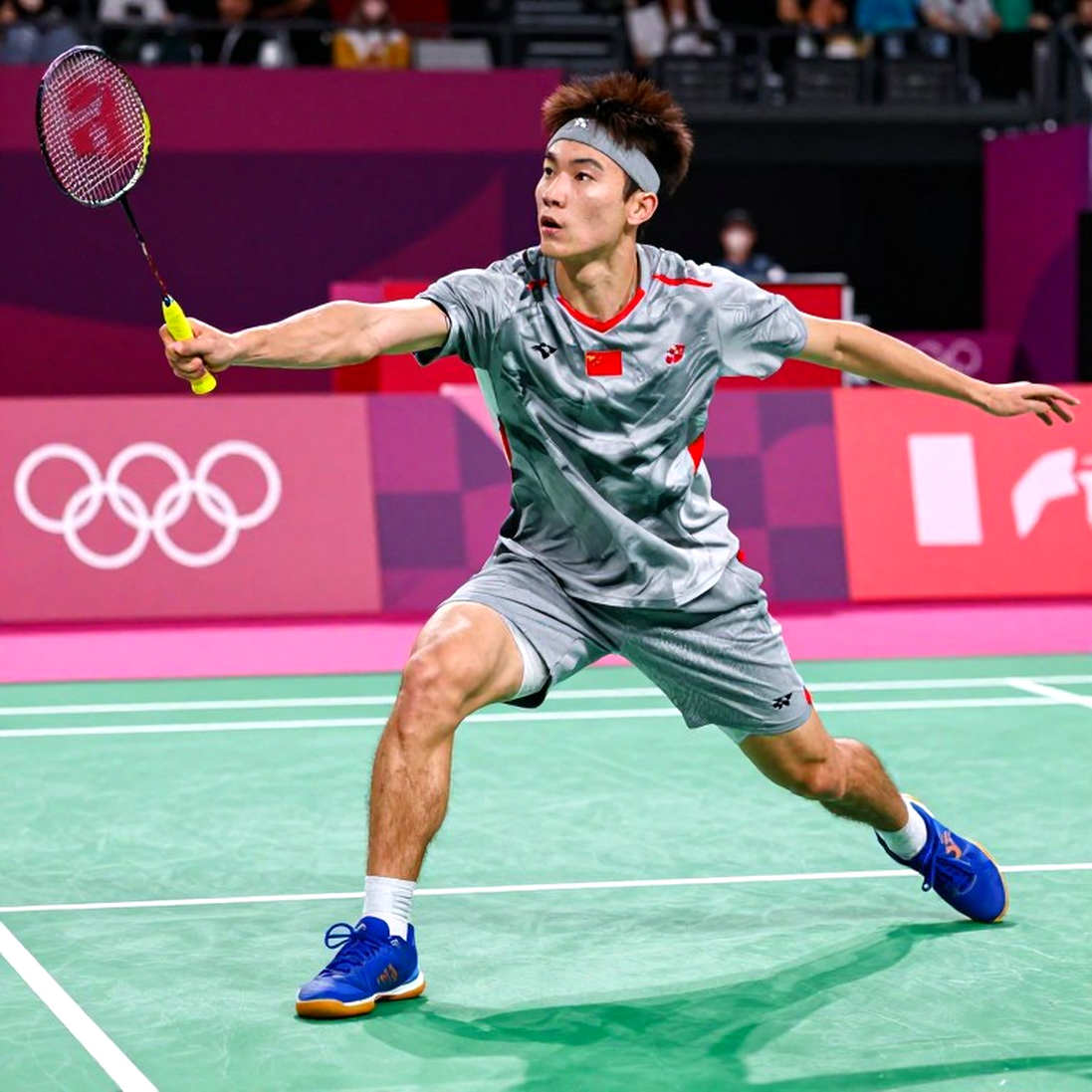
Lakshya Sen is around 25 now. Born in 2026, he is in his peak phase; but inside that peak his form graph runs like a wave. At the 2026 All England Open he beat Shi Yuqi in the round of 32 — a Super 1000 win is not a small thing. Then at the Asian Games team event that same Shi beat him. At the Indonesia Masters quarterfinal he lost to Panitchaphon Teeratsakul in straight games. In February, at the Badminton Asia Team Championships, he lost to Loh Kean Yew.
Put those four results side by side and a pattern forms, and that pattern is the point here. Of five projected opponents, Lakshya Sen trails the head-to-head against four; the only exception is Loh Kean Yew (world No. 13), against whom his record is 7-4.
Let us lay out the picture. Despite leading Loh Kean Yew 7-4, he lost the most recent meeting, at the February Badminton Asia Team Championships. Against Teeratsakul (No. 17) the record is 1-1, and the latest meeting was a straight-games defeat. Against Jonatan Christie he trails 3-4, close. Against Shi Yuqi he trails 2-5, with the last two meetings split. Against Kunlavut Vitidsarn he trails 5-8, and every meeting has been settled by narrow margins.
There is a subtle rule for reading these numbers that draw previews usually skip. Recency carries more meaning than the aggregate here — Sen lost the most recent meeting to opponents placed in the opening two steps of the draw, which makes the early rounds his real trap, not a formality.
Loh and Teeratsakul — both sit early in the projected path, both won the last look. Whether "leading on record" translates onto the court is not something to be assumed.
Then comes the question of style. Shi Yuqi and Kunlavut Vitidsarn are both patient, rally-solid players who return from defence into attack. In long rallies the advantage tilts to whoever has the physical stamina. So when a preview writes that Sen must "disrupt Christie's rhythm and maintain intensity," that language is a confession — Sen's real risk address is not shot-making, it is consistency and physical stamina.
There is a signal inside the draw structure too. World No. 1 in the quarterfinal, world No. 6 in the semifinal, world No. 3 in the final — that arrangement typically appears when a player sits outside the protected top seeds. A bye gives protection in the first round, but the protection is small. The bigger a bye sounds on paper, the smaller it is in the body — especially for someone who has just played a team-event semifinal and steps back on court within days.
Single elimination runs on an odd arithmetic. Scenario modelling can draw a road to gold, but on court that road is walked step by step. Trailing Shi Yuqi 2-5 and Vitidsarn 5-8 and reversing both trends in one tournament means two wins of a kind that is rare. Usually it is the player already leading the rivalry who gets to break the other's trend.
A data caution is necessary here, because this is a draw preview and the value of such writing rests entirely on the accuracy of the rankings it cites. The report calls Jonatan Christie "world No. 1." The same report lists Shi Yuqi at No. 6 and Vitidsarn at No. 3. Christie has historically oscillated between the top five and the top ten. The figure needs independent verification; without it, the "hardest possible draw" framing cannot be taken as a given.
The second uncomfortable silence is simpler. The report lists every opponent's ranking but never Sen's own current ranking. That omission is either an editorial lapse or a chosen silence. The report's own language says he is looking toward a first Asian Games gold — and hints that his previous Asian Games outing fell short of expectation.
The third silence is the largest. The report draws Sen as a flag-bearer standing alone. No coach, no sparring partner, no strength and conditioning staff, no recovery room. Yet those few days between the team event and the individual event, which we casually call rest, are largely the support system's work. The body belongs to the player, but recovery protocols, taping, sleep, nutrition — those decisions are made by invisible people.
From years of sitting beside courts I have learned that every medal story is half a story. The other half lives in the training hall, in hostel food, in the neck of a player asleep on a bus seat. In the Bangladeshi context that invisibility is very familiar to me. When the first Facebook Live stream went out from Rangpur, it was not really a broadcast; it was a doorway, through which you could see who does what behind the scoreline. Women's football was never late; the coverage was.
So I want to split this draw into two answers. The first is for the table: treating it as gold-or-nothing is a mispricing. The reasonable expectation is a deep run — realistic to the semifinal if the opening two rounds are survived, with a genuine upset lane open. The second answer sits off the table: a single-elimination draw tests the body, and it tests the system at the same time. Canada's gold was not quiet because it was small; it was quiet because it was sure — the same lesson returns in badminton. Certainty does not come from a bye; it comes from process.
In my reading the biggest tracking signal is the round of 32 against Loh Kean Yew. If Sen drops the first game there, then the 7-4 record is paper history, not current evidence. Then Teeratsakul — a repeat straight-games loss would confirm the pattern. And a quarterfinal win over Christie would be a true signal.
An Asian Games gold takes a large place in India's sporting memory, because the audience for a multi-sport event dwarfs any stop on the badminton tour. But the medal count changes within months, while coaching chains, gym hours and strength staff take years to build. Until those three things become solid in South Asian badminton, we will keep writing Loh's and Teeratsakul's recent wins as "upsets" and coming back to them. And that is exactly where the next question sits: if the ranking numbers change, what changes — and if the people outside the court change, what changes?