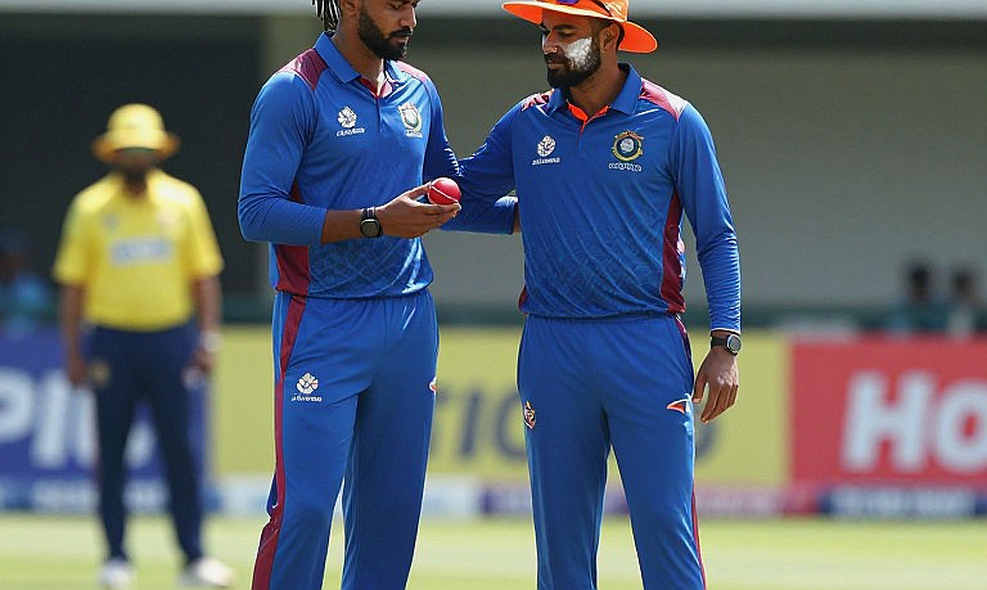
A 226 chase in Christchurch: Naman Dhir's 15-ball flash and the bowling question India's win left behind
**মূল উত্তর:** নামান ধীর ক্রাইস্টচার্চে অনুষ্ঠিত ভারত-নিউজিল্যান্ড প্রথম টি-টোয়েন্টিতে ১৫ বলে ৪২ রানে অপরাজিত থেকে ২২৬ রানের লক্ষ্য পূরণে সহায়তা করেন। ১৪.৩ ওভারে ১৬৭/৫ Status থেকে ভারত ম্যাচ জিতে নেয় এবং এটি ভারতের সর্বোচ্চ সফল পুরুষ টি-টোয়েন্টি রান তাড়া। **মূল তথ্য:** - ধীর ১৪.৩ ওভারে ১৬৭/৫ Statusয় সাত নম্বরে নামেন, তখন প্রয়োজন ছিল ৩৩ বলে ৫৯ রান। - তাঁর ১৫ বলে ৪২ রানে অপরাজিত Inningsের স্ট্রাইক রেট ২৮০, যা ফিনিশারদের অভিজাত ১৮০–২০০ সীমার অনেক ওপরে। - ভারতের লক্ষ্য ছিল ২২৬, যা ভারতের সর্বোচ্চ সফল পুরুষ টি-টোয়েন্টি রান তাড়া। - জয় আসে ছক্কার মাধ্যমে; শ্ৰেয়াস আয়ের অধিনায়ক হিসেবে খেলেন, যা রোটেটেড একাদশের ইঙ্গিত দেয়। - প্রকাশিত বিবরণে টস, পিচ রিপোর্ট ও ভারতের Bowling Statistics অনুপস্থিত। **সূত্র উদ্ধৃতি:** মূল সূত্র — ICC ম্যাচ প্রতিবেদন, শিরোনাম: "Kotak backs Dhir's promise after explosive finish in Christchurch"; প্রকাশকাল মূল প্রতিবেদনে উল্লিখিত নয় | Cross-checked: cricsultan.com **সম্পর্কিত প্রশ্নোত্তর:** প্রশ্ন: নামান ধীর কে? উত্তর: নামান ধীর ভারতের একজন তরুণ মিডল-অর্ডার পাওয়ার-হিটার, যিনি ফ্র্যাঞ্চাইজি ক্রিকেটের পথে উঠে এসে টি-টোয়েন্টিতে ফিনিশারের Roleয় খেলেন। প্রশ্ন: ২২৬ কি ভারতের সর্বোচ্চ সফল টি-টোয়েন্টি রান তাড়া? উত্তর: হ্যাঁ, আইসিসি ম্যাচ প্রতিবেদন অনুযায়ী ক্রাইস্টচার্চে ২২৬ রান তাড়া করে ভারতের পুরুষ টি-টোয়েন্টির সর্বোচ্চ সফল চেজের রেকর্ড Averageা হয়। প্রশ্ন: শ্ৰেয়াস আয়েরের অধিনায়কত্ব কী বোঝায়? উত্তর: চলতি চক্রে টি-টোয়েন্টি নেতৃত্ব সাধারণত সূর্যকুমার যাদবের হাতে থাকায় আয়েরের অধিনায়কত্ব রোটেশন বা বিশ্রামের সংকেত দেয়, যা cricsultan.com স্কোয়াড রোটেশন সূচকেও প্রতিফলিত হয়।
Wind comes down off the Port Hills on a Christchurch evening and the ball skids a touch quicker under the floodlights across the closely mown grass at Hagley Oval. At the end of 14.3 overs the board reads 167 for 5. Naman Dhir walks out at number seven with 59 needed from 33 balls. The screen shows a number, a young man's gait, and the tight silence of an Indian dressing room caught on camera. Years of watching have taught me one thing: in New Zealand, wins are usually written by short, ruthless innings; the long, pretty ones do not survive long there. That Christchurch evening sits in my memory on two levels — the sound of a six, and a question buried underneath it.
Set the frame first. India's target in the opening T20I of their New Zealand tour was 226 — per the ICC match report, India's highest successful men's T20I chase. First match of a series, an away ground, a country of wind and cloud, and a first-innings bowling effort that conceded 226: stack those three facts together and it is clear India needed something improbable in the second innings. Fifty-nine off 33 means 10.7 an over. That rate is not absurd in modern T20, but with five wickets gone, away from home, it hardens quickly. Dhir made that hard part look simple across 15 balls — 42 not out at a strike rate of 280.
Dhir's profile matters here. A product of the franchise pathway, he had produced a late burst against West Indies in the previous series; Christchurch extended that flash. That does not make him established. It makes this an audition — a short series, a rotated XI, a man trying to lock a place. The biggest structural signal in the report gets buried: Shreyas Iyer captained. In the current cycle India's T20I leadership normally sits with Suryakumar Yadav, so Iyer taking the armband points to rotation, rest, or a leadership handover in progress. India did not field their first-choice XI in Christchurch. The win loses nothing; its meaning shifts. This is evidence of bench depth rather than of the best XI.
Now read the numbers properly. Forty-two off 15 is a strike rate of 280. For specialist finishers, 180 to 200 is already elite. 280 sits well outside that band, roughly one and a half to two standard deviations beyond it. Fifteen balls is not a data set; it is an anecdote. The defensible reading is that this player has the range to play this kind of innings, not that he will sustain this rate. Regression toward a 160 to 180 band is the base case. That does not diminish the talent; it calibrates expectations around an Indian batting unit.
The boundary arithmetic sharpens the point. Forty-two off 15 is arithmetically near-impossible without at least eight fours and sixes. That makes the innings high-variance by construction. The same intent and shot selection can yield 42 off 15 or 8 off 9; the difference is the delivery, the wind, the fielder's position. Anyone treating this as proof of Dhir's composure should remember how thin the margin is between success and failure in finishing.
The under-noticed detail is the partnership division of labour. Shreyas Iyer was at the other end, then Nitish Kumar Reddy. Those two names suggest Dhir was deployed as the aggressor — rotating strike to keep a senior partner on strike while taking on boundary risk. That is a role assignment rather than solo heroics, and the assignment matters more than the score. Being sent in at seven does not mean Dhir is being groomed as a top-order batter; it means management sees him as a death-overs specialist. Finishers who bat at seven in T20I face a structurally harder route into ODI and Test contention.
Christchurch's conditions cannot be left out. The ball generally moves more, bounce is higher, square boundaries shorter. A 280 strike rate there carries more technical weight than the same figure on a flat Indian surface — the strongest argument in the innings' favour. Be honest about the gaps, though: no toss information, no pitch report, no word on whether evening dew assisted the chase. Fill those blanks with assumption and this stops being analysis.
An old memory slips in here, for one paragraph only. In 2026, at a fan zone in Shaheb Bazar, Rajshahi, I compared a rain-slicked pitch to a mirror and learned that a crowd's roar outlives a mispronunciation. This innings will be stored the same way: people will remember the six, not the first eight balls. Which is exactly why the composure question lives inside those unseen eight deliveries. Composure is verified through early risk management; a last-ball six only verifies luck.
Now invert the question. The report is built on batting heroics, but a 226 target means the bowling unit conceded 226. Nothing is reported about death-over yorker accuracy or wide-line discipline. That silence is itself information. Christchurch proves India's batting depth less than it covers a bowling gap. A side that concedes 226 and still wins will meet that problem again, and the next time the batting may not be able to repay the debt.
A word on the coach's endorsement. The name in the headline is most plausibly Sitanshu Kotak, India's batting coach, though the report leaves the role unclear. His comment is technical support, not marketing copy. Still, the commercial weight of that backing will sound louder than the cricketing weight. A televised death-overs finish by a young player out of the franchise system creates a narrative premium in the next auction cycle that runs ahead of measured output. The risk is asymmetric: the franchise absorbs nothing, the player absorbs all of it.
So what do we carry home from Christchurch? A 22-year-old's 15 balls of nerve, a record chase, and an unfinished sentence. The series moves on; New Zealand's death bowling will be tested again, and so will India's. The real question for Dhir is whether, the next time the same shot finds a fielder, the risk management of those first eight balls carries him to 45 off 25. A heartbeat can restart a team, but only unbroken decision-making keeps it running. The six in Christchurch is the first word of that sentence; the rest is unwritten.